
4.8 Google Rating


What to Expect During and After Your New Equipment Installation
Our goal is 100% satisfaction, and we will do everything in our power to fulfil all our promises to you.
We want to be upfront and keep you informed of all the processes of the work that will be required for the replacement of your air conditioning equipment.
Unless otherwise noted on your replacement proposal, your new system will be reconnected to your existing: refrigerant lines; drain lines; ductwork; furnace flue pipe; gas supply piping; high voltage plugs, outlets, breakers, disconnects and associated wiring and low voltage control wiring.
Note: Not all of these notifications and procedures may be applicable to your particular replacement project.
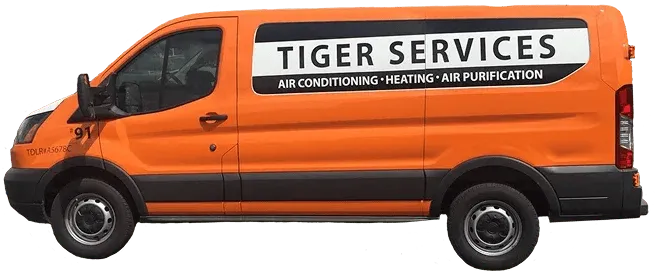
On the day of your installation, here’s exactly what our crew will do
1
Floor Protection and Moving Equipment
Our installers will lay down floor protection between the entry point of your home to the location of the indoor equipment to help protect carpet and floors. However, we will be moving large, heavy equipment through the house, so it is recommended that you move or secure sensitive or breakable items such as pictures and decorations.
2
Closet and Attic Access Wear
If your equipment is in a closet, expect possible scratching on door jambs and interior walls. If located in the attic, similar wear may occur at the attic opening. In some cases, equipment must be disassembled to pass through tight spaces.
3
Ceiling and Structural Risks
For attic installations, technicians and heavy equipment must move across ceiling rafters. If rafters are weak, sheetrock nails may pop out, potentially requiring ceiling repairs afterward.
4
Attic Ladder Safety
If you have a pull-down attic ladder, it will be inspected before use. If it is deemed unsafe at any time, you will be notified. We are not responsible for ladders that break or deteriorate.
5
Attic Workspace Requirements
Installers require adequate, safe working space in the attic, including a platform or decking to work on.
6
Pet Safety
Pets should be confined to a secure area away from the work zone, including outdoor areas where equipment is located, to prevent escape or injury.
7
Frequent Movement During Installation
The installation team will make multiple trips between the outdoor area and the indoor equipment location throughout the process.
8
Outdoor Pathway and Landscaping Impact
A pathway from the truck to the outdoor unit will be used, which may involve crossing grass or bushes that could be damaged. Some vegetation near the unit may need to be removed for proper access and airflow.
9
System Downtime
Your home will likely be uncomfortable during the day as the HVAC system will be completely shut down during installation.
10
Odors During Installation
You may notice unfamiliar odors from welding copper lines, as well as from glues and sealants used on ducts and piping.
11
Noise Levels
Expect noise from various power tools, which may be loud during operation.
12
Thermostat Replacement Marks
If your thermostat is replaced, there may be visible paint outlines on the wall that require touch-up.
13
Use of Bathroom Facilities
The installation team may need to use your bathroom facilities during the day. Your cooperation is appreciated.
14
Respect for Property and Communication
Our installers strive to respect and protect your home, though some unavoidable damage may occur. They may consult you before performing tasks that could pose risks, allowing for discussion of alternatives.
15
Code Compliance Issues
During or after installation, code compliance issues may be identified. If unresolved, these could result in a failed inspection. However, we will not install or leave any system that is unsafe to operate.
16
Thermostat Programming Responsibility
If your system includes a programmable or Wi-Fi-enabled thermostat, you are responsible for programming settings, connecting to Wi-Fi, and managing related apps.
- Some of the odors from the installation process may linger for a few days; mostly the sealants and glues. The new equipment will also have a “new” smell to it that will dissipate after a few days of operation
- During the installation we will purge out your existing drain lines. But when your new high efficiency system starts to operate your condensation line may clog as the new system will create much more condensation and overwhelm a restricted drain system. In the event that this happens we will return at no charge and clear the drain again in the first 6 months. If your drain becomes problematic, we may recommend chemically cleaning the drain line and add a SBG if room allows. There would be additional charges.
- Your new system may be much more efficient than the system that was removed. High efficiency systems, in some cases, will have longer run cycles and depending on the system that you purchase the system may run continuously during peak periods of the day. With systems that are multi-stage or variable speed/capacity you may notice that the system will not achieve your thermostat set point during peak times of the day, this is normal as the system will operate at a lower capacity when the temperature in the home is within 1 to 2 degrees of the set point of your temperature control.
- The new system’s ability to remove moisture from the air in your home changes from day to day depending on a number of environmental factors. The relative humidity in your home may feel different than what you were used to and you may find that you need to set your temperature control either higher or lower than in the past to “feel” the same level of comfort.
- The new system may sound different as well. Depending on whether the air moving equipment is in a closet or an attic, you may hear air noise as the new system, in most cases, is moving more air than the old one did. In other cases, the system may be quieter.
- Because the new system may be delivering more air flow than the old one did, there would be a pressure difference in the ductwork that may cause the air flow balance to change and could possibly cause some rooms to receive additional air flow and get cooler/warmer than the rest. In the event that your ductwork was replaced and/or modified we will make one return trip to adjust air flow at no additional charge
- Your thermostat may have batteries in it for back-up power and/or to power the thermostat. You should replace these batteries annually for reliable operation.
- Lastly, keeping your air filter clean is your #1 way of preventing unnecessary breakdowns. If your system uses a throw-away type filter (Typically 1” paper framed filters) the best practice is to replace these a minimum of once a month. If you have pets and/or heavy traffic through your home, you may need to replace these twice a month. If your system uses a high efficiency air cleaner (Like the April Air Media Filter) these can last 6 months to a year depending on these variables.
Thank You for Your Business
We would like to thank you again for your business and appreciate your referrals. If there is any issue with your new system, we are available 8am-8pm. And your new system comes with a full 1-year labor warranty. You can extend this labor warranty to 2 full years by contracting Tiger Services to perform bi-annual maintenance on your system during the first and second year. Please call our office for details.